
By combining techniques ranging from computational modelling and neuroimaging to pharmacology and non-invasive brain stimulation, we aim to uncover the mechanisms through which neuromodulatory systems and their interactions drive learning, decision-making, and motivation in both humans and animal models.
1 / Computational Modelling of Behaviour
We develop computational models to understand how changes in behaviour are linked to activity within neuromodulatory systems. For example, we recently applied a general linear hidden Markov model (GLM-HMM) to identify transitions in motivational states in non-human primates.

2 / Neuroimaging
Using advanced neuroimaging in both humans and non-human primates, we relate activity in neuromodulatory nuclei to behaviour. Our work leverages 3T and ultra–high-field 7T fMRI, as well as magnetic resonance spectroscopy (MRS). For instance, we recently showed that activity in the human dorsal raphe nucleus — the brain’s main serotonergic centre — is associated with changes in behavioural policy.

3 / Psychopharmacology
Through systemic neuropharmacological interventions, we examine the causal relationships between major neuromodulatory systems and cognition. Our studies have shown, for example, that manipulating the brain’s cholinergic and serotonergic systems has opposite effects on decisions about when to initiate an action.
https://www.cell.com/current-biology/fulltext/S0960-9822(22)00104-X

4 / Neurostimulation with TUS
We employ non-invasive transcranial ultrasound stimulation (TUS) to causally manipulate activity in neuromodulatory nuclei. Recently, we demonstrated that disrupting activity in the dorsal raphe nucleus reduces sensitivity to reward contexts and perturbs transitions in motivational states.

5 / Targeted Drug Delivery with TUS
We also use TUS to transiently and non-invasively open the blood–brain barrier (BBB), enabling delivery of neuromodulatory agents such as serotonin and dopamine to specific brain regions. This approach allows us to investigate how precise modulation of these systems influences cognition and behaviour.
https://www.biorxiv.org/content/10.64898/2026.05.11.724324v1

Interested in doing a PhD or post-doc with us?
get in touch with us here
Our Team

Principal Investigator
Nima Khalighinejad
I studied medicine at Isfahan University of Medical Sciences, before moving to London to complete an MSc in Neuroscience at UCL, followed by a PhD in Cognitive Neuroscience under the supervision of Prof. Patrick Haggard. For my PhD, I investigated the neural correlates of voluntary action initiation in humans. After receiving my PhD in 2017, I joined Prof. Matthew Rushworth’s lab at Oxford as a postdoctoral researcher, where I studied the role of cortico-subcortical circuits in decisions about whether and when to initiate an action in humans and non-human primates. In 2021, I was awarded a BBSRC Discovery Fellowship to begin my independent research, and in 2025, I established my own research group after receiving a Wellcome Career Development Award to investigate the function of neuromodulatory systems in the primate brain.

Psot-doctoral Researcher
Tim Lawn
I am a postdoctoral researcher studying how neuromodulatory systems shape cognition and behaviour. I completed my PhD at the Centre for Neuroimaging Sciences, King’s College London, developing multi-modal methods that integrate molecular information from PET into fMRI to study how neurochemistry shapes large-scale brain network dynamics across psychopharmacology, consciousness, and neuropsychiatric disorders. I then moved to the Athinoula A. Martinos Center for Biomedical Imaging at Harvard, where I developed brainstem-optimised fMRI to measure activity and connectivity from neuromodulatory nuclei directly, applying this to understand the cognitive and affective symptoms of preclinical Alzheimer’s disease. At the NSCLab, I combine fMRI with pharmacology and computational modelling in non-human primates to uncover how dopamine and serotonin interact to drive learning, decision-making, and motivation.

Post-doctoral Researcher
Marie Habart
I am a postdoctoral researcher supported by a Fyssen Foundation fellowship. I obtained my PhD in Neuroscience and Cognition from the Institute of Cognitive Sciences (ISC) in Lyon, France. My research focused on social behaviors, investigating their neural and anatomical foundations in conjunction with behavioural approaches. As I join the lab, I intend to further explore the social dimensions of decision-making processes.
.jpg)
PhD Student
Samuel Winiarski
PhD Student in Experimental Psychology & Biomedical Engineering, supervised by Dr. Nima Khalighinejad, Prof. Matthew Rushworth and Prof. Eleanor Stride. I work jointly in the Biomedical Ultrasonics, Biotherapy and Biopharmaceuticals Laboratory (BUBBL) in Engineering Science and the Neuromodulatory Systems & Cognition Lab in Experimental Psychology.
MEng in Biomedical Engineering Graduate from Imperial College London, with an MSc in Neuroscience at the University of Oxford. I have stayed on in Oxford, working on exciting problems at the intersection of bioengineering & neuroscience.
My project aims to develop non-invasive and targeted neuromodulator delivery with focused ultrasound and nanoparticles. This methodology will subsequently be used to manipulate the concentration of neuromodulators in a target region, examining their effect on established behavioural studies of decision-making.

Research Assistant
Destin Rothe
I joined the lab as an MSc in Psychological Research student in 2023 and I am currently working as a Research Assistant on projects involving human fMRI. My research interests lie in how recreational and therapeutic drugs influence cognitive processes such as decision-making, memory, and sensory processing, and how these changes affect addiction processes. My main focus of research in the lab is a project investigating how foraging decision-making is shaped by beliefs about value and uncertainty of options on offer and the general foraging environment. Insights about the neurocircuitry involved inform a new pharmacological study exploring how serotonergic and dopaminergic agents affect these decision-making processes. This research has various applications, such as for marketing, depression, and substance use disorder.

MSc Student
Mikaella Ngo
I joined the NSCLab in Spring 2025 as part of the MSc in Neuroscience program at the University of Oxford. My project has focused on focal, non-invasive serotonin delivery to target brain regions, and on studying its effects on functional connectivity. In particular, I have been interested in exploring both interactions between specific brain areas and changes across large-scale brain networks. I am continuing my research at the NSC Lab while completing my medical degree at the University of Copenhagen.

MSci Student
Zitong Cheng
I am a 4th year Experimental Psychology MSci student at the University of Oxford, joining the lab in 2025 as part of my integrated master program. I am passionate about the intersection between Psychology and Neuroscience. I have a vast research interest in neuropharmacology, neuropathology and brain networks, particularly in how drugs shape anatomical and functional structure of brain circuits. My project focuses on non-human primates and how targeted delivery of serotonin in different brain areas shape their reward-guided decision making.
MSci Student
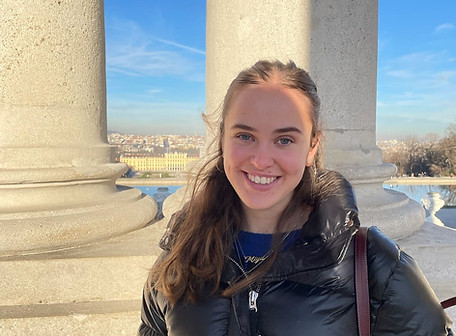
Amelia Stevens
MSci student in Experimental Psychology at Oxford University, currently completing the fourth year of an undergraduate degree. I joined the lab in October 2025 and will be undertaking research on the effect of serotonergic pharmacological intervention on human decision-making in reward environments. My other interests include addiction, particularly opioid use disorder and how pharmacological treatments can provide insight into the underlying mechanisms and corrective pathways of addiction.

Lab dinner, July 2025
Lab Alumni

Luke Priestley
PhD Student
William Reith
Research Assistant & MSc Student

Anika Zhang
MSc Student
Jessica Tennett
MSc Student
Zoe Hilker
Msc Student
GET IN TOUCH
Let’s Collaborate
Drop us an email at nsclaboxford@gmail.com to explore potential collaborations, research partnerships, or to learn more about our ongoing projects.


